

I Thought We Won: Uber Settlement Unpopular With Plaintiffs
By DeAnn Chase November 28, 2016 Category: Business Law
After reaching an $84 million settlement with Uber, Massachusetts' attorney Shannon Liss-Riordan has found herself subject to immense criticism from Uber drivers and attorneys alike that claim the settlement is too low and a sell-out of their interests. At the end of June, U.S. District Judge Edward Chen of the Northern District of California issued an order stating that he still has insufficient information to approve the deal. The terms of the settlement would release a multitude of driver claims against Uber and thereby eliminate more than a dozen other pending cases in the process. Liss-Riordan settled the class action... READ MORE
Google Withstands Oracle’s Copyright Suit
By DeAnn Chase November 23, 2016 Category: Trademarks & Copyrights
In late spring of 2016, Google received a favorable verdict after being sued by Oracle for billions of dollars. A jury unanimously found that Google's use of a code was "fair use" under federal copyright law. Fair use allows people and organizations to reproduce, modify, distribute, display, and publicly perform works created by others in certain circumstances and for certain purposes. Two such purposes which may be beneficial to business owners are teaching and research. Google included parts of computer code, known as "application programming interfaces" (APIs) in Android that originated in another programming language. This language, Java, was owned... READ MORE
2016 Changes To The Laws Regulating Threshold Real Estate Brokers
By DeAnn Chase November 21, 2016 Category: Real Estate

Many California state laws are revised or amended each year. It's never too late to review some of the changes going forward as we approach the end of the year. 2016 saw a multitude of federal and state laws that affect the sale of real estate, as well as the agents and brokers thereof. Senate Bill 647, codified as California Business and Professions Code §§ 10232.3, 10232.45 and 10238 respectively, became effective January 1, 2016. This law makes various changes to the rules governing threshold brokers including: adding a category of properties they are permitted to solicit; changing the timing... READ MORE
Data Breach Risk Management For Business Owners
By DeAnn Chase November 18, 2016 Category: Business Law

Today's article covers the relevant federal and state laws regarding the collection and sharing of personal information, as well as the notification requirements when data breaches occur in a public or private workplace. Federal Law The Gramm-Leach-Bliley Act (the "Act") requires qualifying financial institutions to explain their information-sharing practices to their customers and to safeguard sensitive data. The FTC Safeguards Rule under the Act requires financial institutions under FTC jurisdiction to have measures in place to keep customer information secure. Disclaiming guaranteed protection of customers’ information is not an acceptable measure, and therefore not a defense. Qualifying businesses have a... READ MORE
St. John’s Holdings, LLC v. Two Electronics, LLC: A Text Message Can Form A Binding Contract
By DeAnn Chase November 16, 2016 Category: Contracts

Emails and text messages are the 21st Century's preferred forms of communication. This is especially true in the real estate industry where buyers and sellers network and communicate with their brokers and agents around the clock, striving to close the perfect deal. To what extent may parties to a real estate transaction, or to any transaction for that matter, actually consummate and close a deal through emails and text messages? In what seems like a landmark case, a Massachusetts court found that text messages between two parties may form a binding, legal contract, even despite no formal offer ever being... READ MORE
About AB 1727: The California 1099 Self-Organizing Act
By DeAnn Chase November 14, 2016 Category: Business Law

About ten percent, or 1.9 million, of California's 19 million person workforce consists of independent contractors. Non-union workers reportedly earn 20% less than their union counterparts in the current gig economy. Classifying workers as independent contractors has severe consequences for such workers, as non-employees generally have no statutory right to minimum wage, overtime pay, compensation for on-the-job injuries, unemployment insurance for involuntarily leaving employment, or protection against other illegal employer activities like discrimination. In the winter of 2016, a California Assemblywoman, Lorena Gonzalez, introduced AB 1727 aka The California 1099 Self-Organizing Act, an amendment to California's Labor Code. Gonzalez' intention... READ MORE
Employers Must Comply With New FLSA Salary Thresholds
By DeAnn Chase November 11, 2016 Category: Business Law

California employers must be prepared to implement . Effective December 1, 2016, businesses that employ any employee earning an annual salary under $47,476 must re-assess and evaluate these new federal wage requirements affecting employee compensation. The FLSA's two-part compensation and duties test for exemption has not been changed by the new regulations. Instead, the minimum amount of salary required to qualify for the exemption has been revised. The final rule issued by the DOL increases the income threshold for employers to $913 a week, which is $47,476 annually. This new threshold is more than twice the current minimum salary. Under... READ MORE
Can Coke Trademark The Name “Zero”?
By DeAnn Chase November 09, 2016 Category: Trademarks & Copyrights
Although Coca-Cola was granted its requested relief in May of 2016 by a three-judge panel of the U.S. Patent and Trademark Office, winning the right to trademark the term "zero" for its beverage products, other soft drink companies, including Dr Pepper Snapple Group, were allowed by the panel to trademark the term "zero" as well. Because the Coca-Cola "zero" brands had "acquired distinctiveness" and fit as "substantially exclusive," the trademark was allowed. According to the panel, Dr Pepper, who challenged the trademark almost ten years ago, wasn't able to prove that "zero" is a generic term that could not be legally trademarked. The panel... READ MORE
Latest On Password Sharing From The Ninth Circuit
By DeAnn Chase November 07, 2016 Category: Business Law

The Computer Fraud and Abuse Act (CFAA), 18 U.S.C. § 1030, was enacted by Congress in 1986 as an amendment to the Counterfeit Access Device and Abuse Act. While the CFAA is primarily a criminal law, an amendment in 1994 allows civil actions to be brought under the statute. While the CFAA has been amended many times in attempts to make it successfully evolve with the needs of computer users, rulings in two recent Ninth Circuit cases leave many other questions unanswered about the proper interpretation of the law, opening the door for more uncertain litigation, and perhaps the prosecution of individuals that... READ MORE
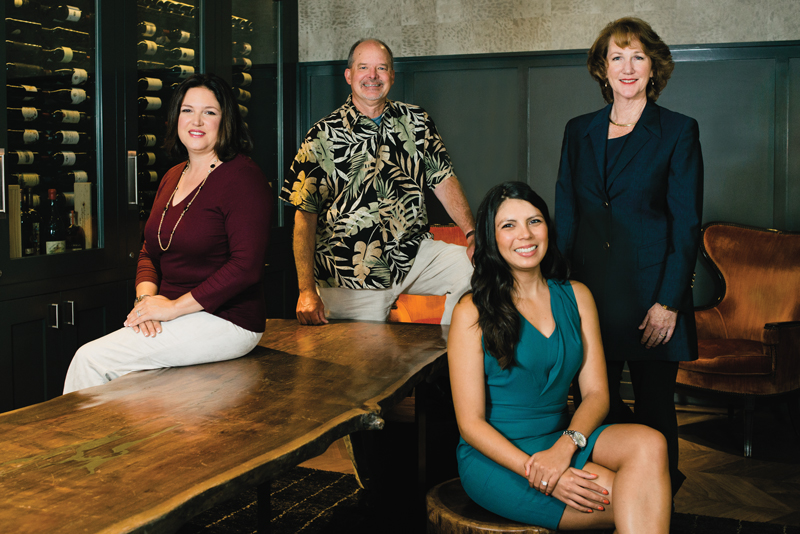
Chase Law Group provides legal services to entrepreneurs, business owners and professionals across Southern California, tailoring legal counsel to protect personal and proprietary assets through all stages of business ownership. DeAnn Flores Chase started Chase Law Group in 2007 and has practiced law for two decades. Read the full article here READ MORE